Showing posts with label nonviolence. Show all posts

Wednesday, January 26, 2011

The Meaning of Fear

Upon returning to the U.S. from Israel-Palestine, I've thought a lot about fear. In a couple of weeks, the organization I work for is hosting a symposium on addressing fear in the church and broader society. Today on a planning call we talked about how fear is a tool used to exercise power over others and about how we can be instrument to address fear, too, by being aware of the narrative we tell when we choose not to be afraid in a scary situation.

I immediately thought about the opening devotion of our CPT delegation, in which we read from Luke 24:26-51. The risen Jesus appears among his disciples and they are afraid. But Jesus calms the disciples’ fears with greetings of peace, he lets them see him and touch him. He eats with them, opens their minds, and blesses them.

Rick, our delegation leader, offered that Jesus' action in this passage is a model for the incarnational ministry that CPT does and could serve as a model for us on the trip too. We went around the circle naming our fears and exchanging greetings of peace, a perfect way to begin to know each other.

The theme of the devotional struck a chord; I had already been thinking about fear while preparing for my trip. So much so, in fact, that I journaled about it on the plane ride over:

"Is it safe?" "Are you afraid?"-- two questions I've been asked frequently when sharing about my trip. With regards to safety, I don’t know how to answer. I get asked the same question about my neighborhood in DC.

And it's true, in the suburbs where I grew up, you don’t hear nightly sirens or occasional gunshots like you might in my current home. But in reality, safety and security are so often an illusion. We put up barriers, segregate neighborhoods, but at what cost?
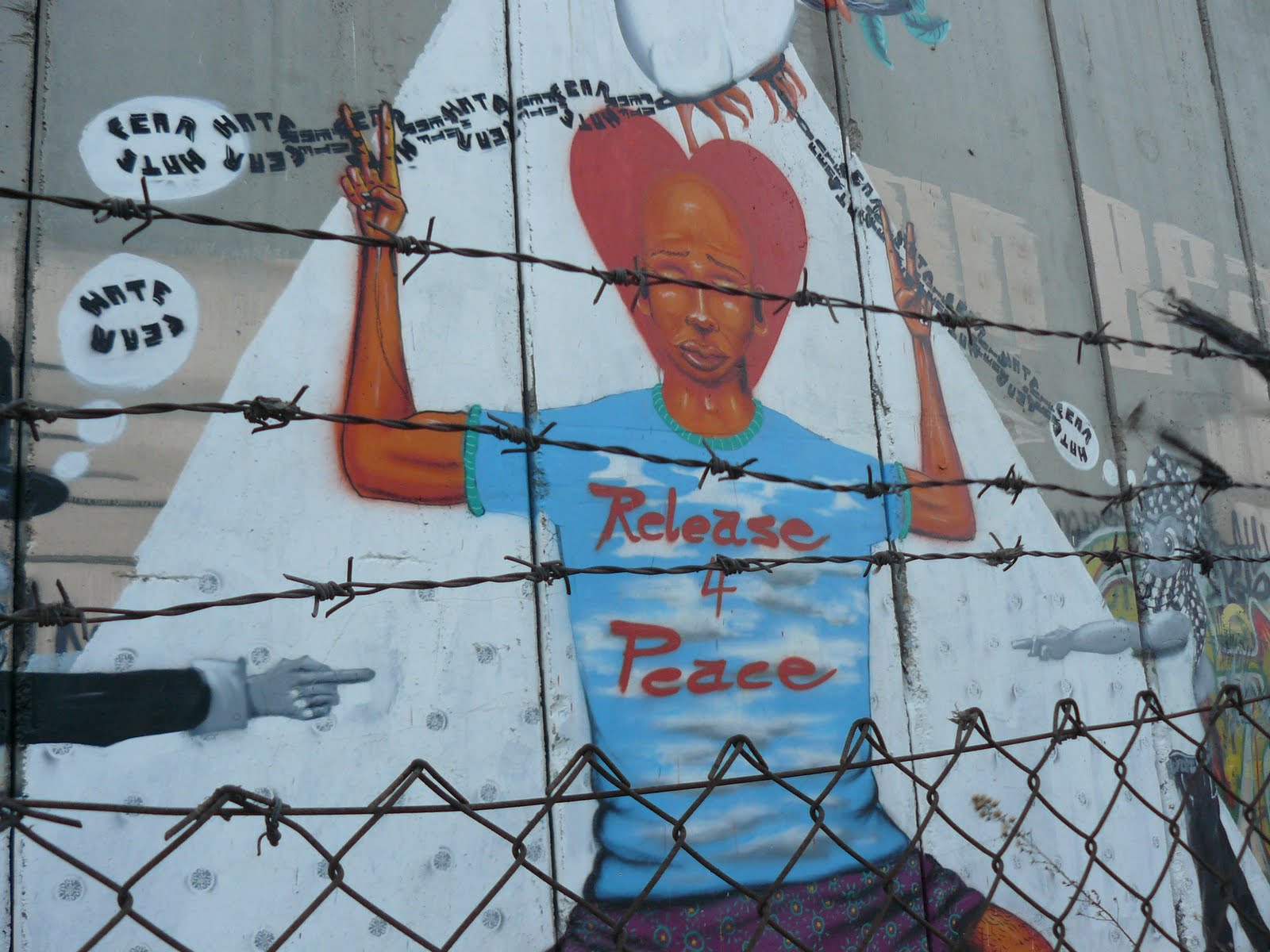
It may indeed allow some people to live in quieter spaces with less violent crime, but it also serves to isolate us from the reality that our sisters and brothers on the other side of that gated community, or other side of the world, face. It isolates us from meaningful relationships with them, and from hearing God's voice in the unique way that God speaks at the margins and in suffering.

I think the same dynamic exists in traveling to an occupied territory. Though we can separate our lives, in some ways, from the world’s violent realities, this separation is an illusion. By virtue of being U.S. taxpayers who fund a massive military, sell weapons, and give aid to countries with atrocious human rights records,
we, too, are culpable and our fates are inextricably intertwined with those who suffer from abuses of militarism and infringements upon human rights.

When we begin to view our human connectedness as brothers and sisters, responsible for eac
h other’s welfare, we are compelled to tear down the physical and abstract walls which separate and "protect" us. This idea, for me, is tied to that next question of “Are you afraid?”

When I read about acts of violence committed, hatred, kidnappings, rocks thrown, random beatings and abuses, detention and prevalence of machine guns, fear sits at the pit of my stomach.

I don’t like it. I want to make it go away, to dull that feeling by distracting myself, thinking about something else. But I recognize the privilege in being able to do that; threats of violence are real and close for many in the world, and fear isn't dulled by merely turning on the TV.

The presence of threat really does exist for many people in Palestine, so if there can be any semblance of solidarity through experiencing this fear, I don’t want to cover it up, I don’t want to be distracted. I want to be present in it.

It is a reminder that nonviolence is not a warm fuzzy idea, achieved through holding hands in a grassy field and singing. It is a lived-out practice, risky, from which suffering may come. We know this to be true not only by bearing witness to today’s peacemakers but also in studying the life of Jesus, who preached a counter-cultural message (turn the other cheek?!) and lost his life.

So, for these reasons, safety and fear, while important questions to me, aren’t the determining factors in a decision to make a trip like this. A narrative of fear, so prevalent in the media and even in the church, seeks to limit and demonize. I want to challenge that.

"Come and See" was the theme of the homily the last Sunday service our delegation was in Jerusalem - a plea to come and witness the suffering that the occupation causes - holding both Palestinians and Israelis captive in various ways. Coincidentally, its also the title of the document Palestinian Christians have produced encouraging Christan tourists to seek to understand more of the Palestinian story on their pilgrimages.

I call upon all of my readers and loved ones to "come and see," too, - to visit Israel-Palestine, if possible, as well to visit all the places in our hearts and lives in which fear and prejudice still reigns, to examine that fear, and to courageously challenge it through following the command of "be not afraid" and crossing the boundaries in our lives which "protect" and separate. By crossing into those places, literally and metaphorically (which may occasionally involve some risk to personal safety!) we experience a richness and liberation in new relationships and understanding.

Thursday, January 13, 2011

Model of Resistance and Resilience

“I'm not better than those who have been killed. We cannot remain silent.” - Muna* told us over mountains of delicious maklube that she had prepared for us.

After the massacre in 1994 in Hebron, when a Zionist extremist opened fire in the main mosque (the tomb of Abraham) on the last day of Ramadan, killing 29 and wounding hundreds. Israeli soldiers, thinking the shots were part of a Palestinian uprising, killed several other individuals packed into the mosque that day. The city went under curfew (effective house arrest) for several weeks, and a number of other Palestinians who went into the streets to buy more food were shot.

During this time, Muna challenged the curfew by going out and spoke to journalists about the situation. Though her life was threatened, she said she was not worried about being killed, because doing the right thing was more important to her life.

A few years later, Israeli soldiers dragged a young man into her house to be beaten. “This was an insult to me and my home, to beat a man in it, so I demanded that they leave,” she said. The soldiers pointed a gun at her and at man's head, but she wrapped her arms around the young man and said, “this is my son!” The soldiers began to beat her as well.

Muna filed a complaint against the soldiers at the police station, a process that took four days. She spent many hours waiting at the police station, and commented that typically people would give up after waiting four or five hours without being able to speak to anyone. In this case, the soldier was removed from his post, though very often, complaints by Palestinians are ignored or dismissed.

Muna is a beacon of strength and inspiration. She called for more women to lead in nonviolent resistance against the soldiers, because the soldiers are more reluctant to attack women. Muna is a school principal, manages a boys' soccer team (shattering stereotypes in the process!), has created playground spaces below military outposts, and is translating a film on Druze soldiers from Arabic to English, among other endeavors. She creates gardens to make the spaces which she has control over more beautiful, in contrast with the barricades and razor wire outside of her home.

Through educating, standing up against injustice, and her creativity and resilience, for me, Muna is a model of nonviolent resistance, one of many, many inspiring people we've been able to meet throughout Jerusalem and the West Bank.

*Not her real name.

Thursday, October 14, 2010

Exciting birthday news: Upcoming trip to Israel/Palestine

“Dear young people...Become craftsmen of a new humanity, where brothers and sisters - members all of the same family - are able at last to live in peace,” Pope John Paul II implored.

The words convict me. For over two years, I’ve lived in Washington DC, the capital city of the most powerful nation in the world, doing ministry in national-level faith-based non-profit organizations. The work has been meaningful, the lessons, plentiful. I’ve grown, and I’ve developed a better understanding of my vocation.

But I’ve also felt removed. Removed from the experiences of kids like Chuy, son of migrant farmworkers for whom I was a camp counselor in Bonita Springs, FL. Removed from the suffering of Gloria and her baby Isabella, an undocumented woman abused by her husband, whom I accompanied at the Houston Catholic Worker. I “work for justice and peace,” but inside the Beltway, where my work often focuses and policy and education several levels removed from real, living people, I become disconnected. I’m less often friends and companions of members of the human family who are at the margins.

Our vocation, JP2 said, is to be craftsmen and women of a new humanity. How do we do that? In my 26th year of life, I’m looking for answers to this question. I believe that God calls me, and all of us, to reject violence and to live out Jesus’ call to be peacemakers. One of the ways I want to explore this call be is through attending a two-week delegation to Israel/Palestine with Christian Peacemaker Teams (CPT) in January 2011.

On this delegation, we will learn from and dialogue with full-time CPT staffmembers, government officials, NGOs, and the active, creative nonviolent movements throughout Israel/Palestine. We will express our support and solidarity with the Palestinian Christians suffering in Gaza and the West Bank. We will document human rights abuses and publicly witness that we seek to end U.S.-supported violence. We will return home with personal stories of the relationships that we have developed and the way in which nonviolence is being practiced in a place where peace may sometimes seem hopeless, like a naïve dream.

As some of you know, I have been discerning participating in nonviolent accompaniment for several years. I’m both nervous and excited to take this next step, and I ask you, my beloved community, for your support through:

Your curiosity/accompaniment – I want to be in dialogue with you about these issues, to hear your perspectives, experiences, and your own personal sense of vocation. I want to be able to share my experiences with you. And I’d be very happy to share with you or your community my experiences after I return. It would be an honor to share this journey with you.

Your prayers – If you are someone who prays, I ask you to pray for the people of Israel/Palestine who have experienced decades violence. Please pray for interfaith cooperation and understanding, for renewed commitment to nonviolence, and for the end to senseless killing and hatred. Pray for an end to the illegal Israeli settlements on Palestinian land. I also ask that you pray for the delegation – for our safety, for open hearts, meaningful experiences and dialogue, and opportunities to share about our time upon return.

Your finances – By partnering with myself and with CPT, you’ll be sustaining the efforts of men and women who are taking Christ’s message of peace around the world into places where violence is a way of life. Your support makes you a fellow peacemaker in CPT’s work. You’ll also help support me in covering the cost of this trip as I put myself through an MA program in Pastoral Studies. Donations are tax-deductible.

If you’d like to support my trip, I’d love to talk with you more about it. You can visit my fundraising page at http://www.firstgiving.com/cptjennsvetlik or email me.